Reservoir Check Up
Just like you see a doctor regularly to make sure you're healthy, TVA scientists check on the Valley reservoirs to make sure they're in good condition.
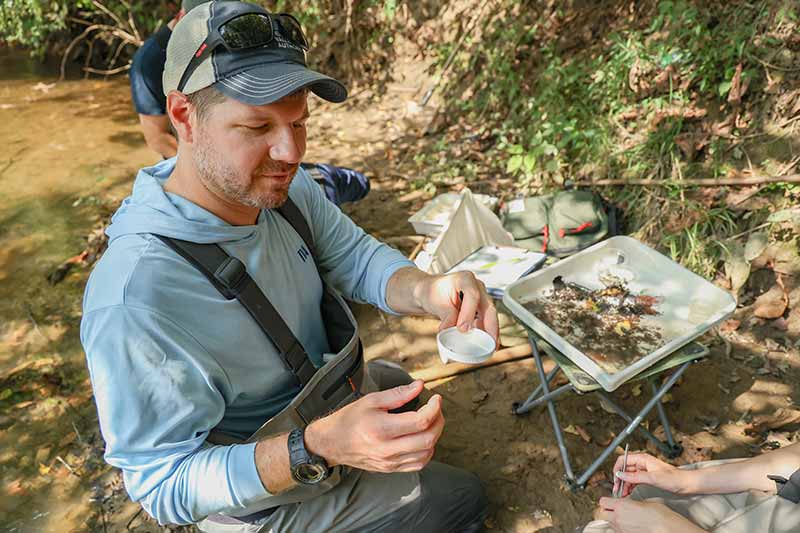
To check on the health of a reservoir, TVA takes small samples of water from different places, like in the river before the water reaches the reservoir, in coves along the shore and the deep water by the dam.
You can check the health of TVA reservoirs near you!
Kids Water Monitoring Lab
You can be an environmental scientist! TVA's Water Monitoring Lab gives students in grades 4-6 the chance to test water quality and share the results.
The program is available through the virtual water monitoring lab. Educators can request free test kits or learn more by emailing [email protected].
Schools in Knox and Hamilton counties in Tennessee can also schedule in-person sessions thanks to help from Bicentennial Volunteers Inc.
5 Signs of Reservoir Health
Scientists look at these five things to tell if a reservoir is healthy:

Oxygen: A healthy reservoir has enough oxygen for the fish and other aquatic animals living in the water.

Algae: A healthy reservoir has some algae. Fish use it for food, but too much algae can affect the oxygen levels of the water.
Fish: A healthy reservoir has lots of different kinds and sizes of healthy fish.

Bottom Dwellers: A healthy reservoir has a lot of different animals living in the mud at the bottom, including worms, snails, crayfish and mussels.
Sediment: A healthy reservoir doesn’t have chemicals in the mud at the bottom. Sometimes pollution leaves things like pesticides or metal in the mud for many years.
River Monitoring
TVA checks more than 100 sites each year to keep a close watch on water quality. These checkups help TVA's watershed teams plan projects that can help each reservoir and stream.
The river and reservoirs are used in many ways. TVA has to keep all these uses in mind when thinking about how to protect and care for the water.
Some of the things TVA considers when managing the water are:
Managing Water Supply:
The river needs enough water to let boats travel, give fish a place to live and supply cities with water. But there can’t be too much water – that can cause flooding along the shoreline. Dams help move water through the river to make room for more water to be stored during times of heavy rain. Dams also control how fast that water moves along the river.
Tailwater Improvements:
Dams help supply clean, reliable energy. But dams also change the water environment. Water released from dams may not have a lot of oxygen in the water. Fish living below a dam need more oxygen. TVA uses different ways to add oxygen to the water, including weird dams, air compressors, autoventing turbines and water pumps.
Protecting Aquatic Life:
The Tennessee River watershed is home to more than 300 kinds of fish and dozens of kinds of mussels. Some of these fish and mussels are very rare. They only live in our region! TVA works with a network of partners, like local communities and government agencies, to make sure these fish and mussels can survive in our waterways.
Word Jumble
🎉 Congratulations!
You solved all the jumbles in 0:00!
Final Score: 0 points