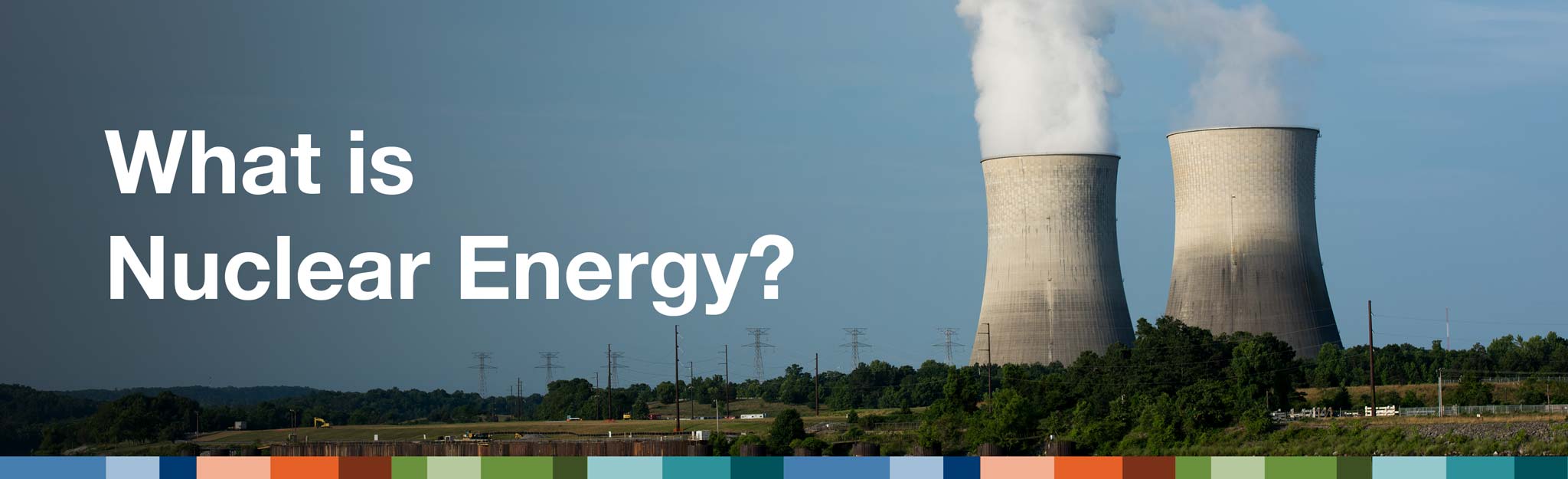
What is Nuclear Energy?
TVA has three nuclear power plants: Browns Ferry Nuclear Plant in Alabama and Sequoyah and Watts Bar nuclear plants in Tennessee. These plants produce a lot of energy for months at a time.
Nuclear energy creates 40% of TVA electricity
Nuclear power plants generate 8,275 megawatts of electricity each day – enough to power 4.5 million homes and businesses!
TVA has the 3rd largest nuclear power system in the U.S
Nuclear plants run on uranium. Uranium is a special type of mineral found in the earth’s crust, rocks and seawater.
Atomic energy comes from splitting the tiny atomic particles of uranium in a process called fission. When these atoms divide, they release heat. The heat turns water into steam. The steam turns turbine blades that spin a generator. The generator makes electricity that is used to power millions of homes.
TVA’s nuclear plants use two different methods to generate electricity.
- Boiling-water reactors: These reactors, used at Browns Ferry Nuclear Plant, turn water into steam in the reactor core. Learn more about boiling-water reactors.
- Pressurized-water reactors: Water passes through the reactor core but is kept liquid, though very hot. From there, it flows to the steam generator, where it turns a second supply of water into steam. That steam turns the turbines and powers the generator. The pressurized water then goes back to the reactor where it is heated again and again. The video to the right explains how a pressurized water reactor works.
Fueling Up
Nuclear power plants can run for a long time without having to start or stop.
But every so often, a unit needs to take a break. The pressurized-water reactors at Sequoyah and Watts Bar nuclear plants need to refuel every 18 months. Browns Ferry Nuclear Plant, a boiling-water reactor, needs to refuel every 24 months.
During this time — called an outage — TVA removes used up uranium rods and puts in new ones.
The men and women that work at the nuclear plants also check out all the equipment and systems, make repairs and make sure everything is working well.
When everything is done, they can restart the nuclear reactor.
Is it Safe?
Yes!
Nuclear power is very safe. It does not release smoke into the air. The white clouds you may see from the towers are water vapor. Nuclear plants do create heat and radiation. This radiation is carefully controlled and contained. Plants keep radiation from escaping with multiple layers of protection, such as:
- Metal tubes called fuel rods
- Thick steel and heavy-duty metal piping
- Reinforced concrete walls and roof
We get small amounts of radiation every day, from the sun, TVs – even some foods! We use radiation to help treat people who are sick or to see inside the body with x-rays.
But too much radiation can cause health problems, like cancer. That’s why safety for employees and the people who live near nuclear plants are taken so seriously.
While nuclear power does release some radioactivity, you might be surprised to learn just how little exposure this produces for the average American.
Today, a person in the U.S. receives an average exposure to radiation of about 350 millirems per year. This comes from both natural sources, like minerals in the soil, and man-made sources like televisions or x-rays.
Radiation from all commercial nuclear energy power plants has averaged only 0.01 millirem per person each year. That's a fraction of the total average radiation Americans are exposed to in their regular daily lives. For example, a chest x-ray exposes a patient to 10 millirems.
Safety First!
Government agencies carefully monitor nuclear power plants and make sure they meet strict standards for safety and security.
Safety is a top priority for TVA and its workforce. Here are some of the ways TVA works to keep our communities safe:
- Physical barriers that protect against the release of radiation
- Backup systems for power and cooling of the reactors
- Emergency drills to make sure everyone knows what to do in an emergency
Next Generation of Nuclear Power
Today’s nuclear power plants are similar to the first nuclear power plants, introduced in the 1950s.
But scientists and researchers are working on the next generation of nuclear power — and TVA is part of that effort!
TVA is working to develop small modular reactors. They work similar to the large reactors currently in use. But they are smaller, and they can be built in a factory and installed at a site. That can save time and money.
Glossary:
- Uranium – a heavy metal that can be found in rocks, the earth’s crust or seawater. It is naturally radioactive. A form of uranium is used in nuclear power generation.
- Fission – the nuclear process that splits a larger atom into smaller atoms. The process releases a lot of heat that is used in electricity generation.
- Radiation – this is energy that moves from one place to another in waves or particles. Some radiation happens naturally, like sunlight. Other radiation comes from man-made sources, like a microwave or x-ray machine.
- Millirem – the unit of measurement for radiation dose, abbreviated as mrem.