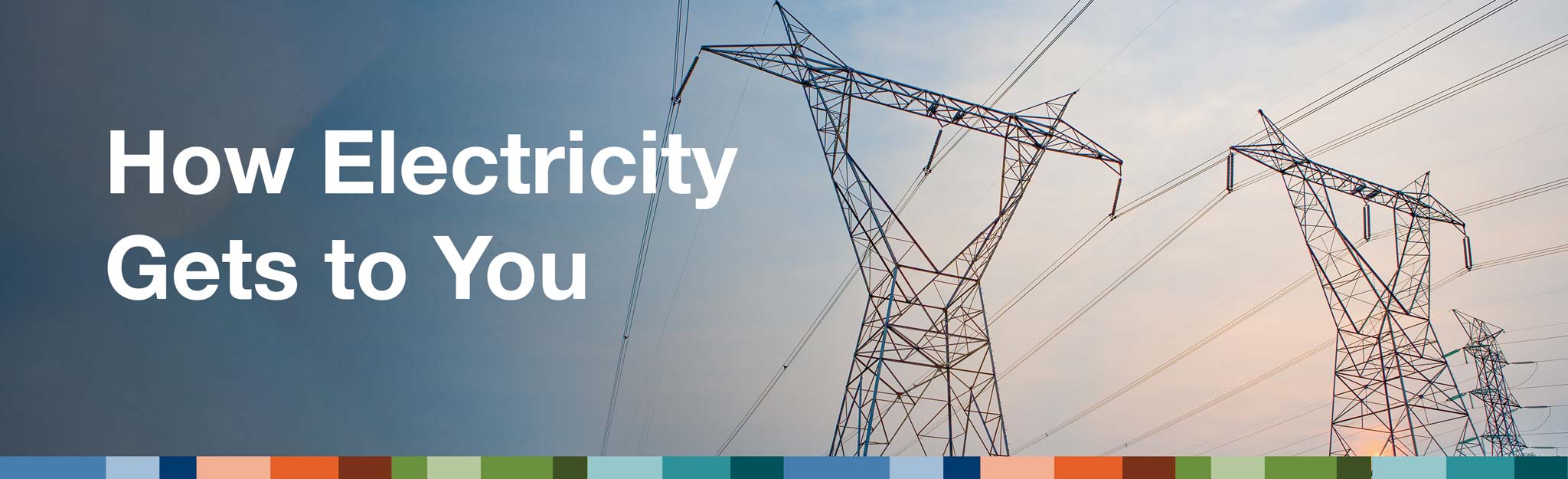
How Electricity Gets to You
Have you ever wondered how the lights turn on when you flip a switch? It all starts with TVA’s power plants, which make electricity.
Once electricity is made, it needs to be moved from the power plant to your home or school.
TVA uses its Transmission System to do this.
TVA has 16,400 miles of power lines — that's enough to stretch across the U.S. six times!
TVA also has about 500 substations that help control the flow of electricity.
What is the Transmission System?
The transmission system is like a highway system. Electricity travels from one place to another.
TVA delivers electricity from its power plants to 153 local power companies to make sure everyone gets the electricity they need. These local power companies bring that electricity to your house or school.
Here’s some important parts of the transmission system:
Voltage: This is like pressure that pushes electricity through the lines. Higher voltage means higher pressure.
Current: This is the amount of electricity that is flowing through the lines.
Transformers: This machine changes the voltage – or pressure – of electricity.
Substations: These control the pressure and speed of electricity as power goes onto or leaves the transmission system.
Power Lines: Thick cables that carry electricity from power plants to homes, schools and businesses.
Towers: tall metal or wood towers that keep lines high off the ground where they are safe
Insulator: This acts as a shield and keeps electricity from easily flowing through it. Insulators on electric towers are usually glass or porcelain. In your home, electrical wires may be covered in a plastic coating. Electricians may wear rubber gloves when working on electric wires.
Safety First!
Power lines can be very dangerous! Stay away from power poles, towers and fences near power substations. And never get near a power line that’s on the ground.
Read more about power safety!
Keeping the Power On
TVA works hard to keep the electricity flowing.
Workers check the power lines often to make sure they’re in good shape.
They also work with landowners to keep trees and plants away from the lines. This helps prevent outages and makes it easier to fix problems.
Meet the Lineworkers
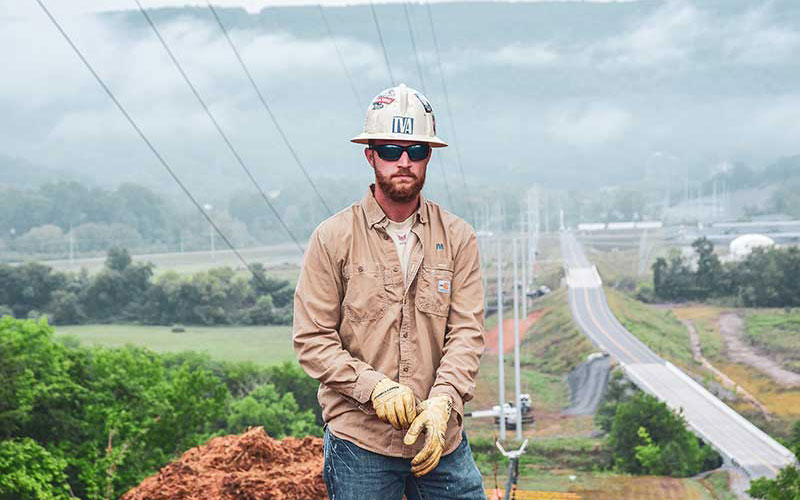
Lineworkers are the people who take care of power lines. It’s a special job that takes a lot of training to do safely.
TVA has a special training program to teach people how to become lineworkers.
Want to learn more? Check out Addison Beene’s story about being a lineworker.
Glossary
- Electricity — A form of energy that powers lights, computers, and other devices.
- Power Plant — A place where electricity is made.
- Transmission System — A network of wires and equipment that moves electricity from power plants to homes and schools.
- Voltage — The pressure that pushes electricity through wires.
- Transformer — A machine that changes the pressure (voltage) of electricity.
- Substation — A place that helps control how electricity flows and where it goes.
- Insulator — A material that stops electricity from flowing through it, like rubber or plastic.
- Lineworker — A trained person who fixes and takes care of power lines.