'%3E%3Cmask id='b' fill='%23fff'%3E%3Cuse xlink:href='%23a'/%3E%3C/mask%3E%3Cuse fill='%23414141' xlink:href='%23a'/%3E%3Cg mask='url(%23b)' fill='%23414141'%3E%3Cpath d='M-160-170h300v300h-300z'/%3E%3C/g%3E%3C/g%3E%3C/g%3E%3C/svg%3E)
Come Rain or High Water
Managing Rivers, Saving Lives
More than three months after a devastating flood struck Kerrville, Texas, Keith Brown still remembers the urgency that gripped him as he scrambled to find a sitter for his two elderly dogs before rushing out the door to help those in need.
It was around 4 a.m. on a Fourth of July Friday when Brown got the call that the Guadalupe River had breached its banks. The water surged more than 20 feet in just a few hours, inundating communities across central Texas.
As a water rescue program coordinator for Texas A&M’s Engineering Extension Services, Brown is no stranger to these high-stakes emergencies.
Within minutes, members of Texas A&M’s Task Force 1 team were on the move. They ultimately helped rescue more than 100 people from rising waters.
Brown credits the team’s success to two things: the trust he places in their decision-making and the countless hours of training on TVA-managed rivers.
“In the incident in Kerrville, (the motors on our boats) went down (and) our voices were elevated,” Brown said. “But there wasn’t any panic in our voice – just deliberate communication.
“That’s what training in Tennessee provides us.”

The region’s rivers provide an ideal setting to safely practice critical skills that translate to real-life emergencies, such as navigating debris-filled currents.
Readying Rescuers
Every year for the past decade, Brown has made the 15-hour drive from Texas to Tennessee to train his team on the rushing waters of the Caney Fork River.
Known for the scenic waterfalls that flow through Rock Island State Park, the Caney Fork is managed by TVA through Great Falls Dam.
The river’s narrow corridors, dynamic flow and challenging terrain create a controlled yet difficult environment that mirrors – and often exceeds – real-life rescue conditions.
“There’s little room for error in Tennessee,” Brown said. “It allows us to train for things that can happen in real life in somewhat of a controlled environment.”
It’s the ideal setting to safely practice critical skills that translate to real-life emergencies, such as rescuing people from vehicles, navigating debris-filled currents and managing equipment failures.
That same philosophy drives training efforts on other TVA-managed rivers, like the Ocoee, where Jim McCool, a swift-water rescue instructor with Scenic Rivers Water Rescue, has trained responders for the past 25 years.
Winding through the foothills of the Great Smoky Mountains, the Ocoee River provides miles of Class III and Class IV rapids that, along with offering world-class whitewater recreation, are also prime for swift-water training.
“It’s moving water somewhere around 4 to 5 mph,” McCool said. “It gives us an opportunity to be out there swimming, wading and operating a raft in currents that mimic what swift-water rescue teams will be responding in.”
A water rescue instructor for both national and state emergency agencies, McCool understands the level of stress that’s placed on rescuers when conditions are at their worst.
In the aftermath of Hurricane Helene, as a flash flood tore through Unicoi County in eastern Tennessee, members of teams trained by McCool and others helped rescue dozens of people trapped on a county hospital rooftop.
The predictable yet challenging flows that TVA-managed waters provide simulate these real-world conditions, McCool said.
“It’s a controlled environment,” he said. “We’re not putting (rescuers) at great risk of getting swept downstream, but we’re still exposing them to the stress they’ll face in real emergencies.”
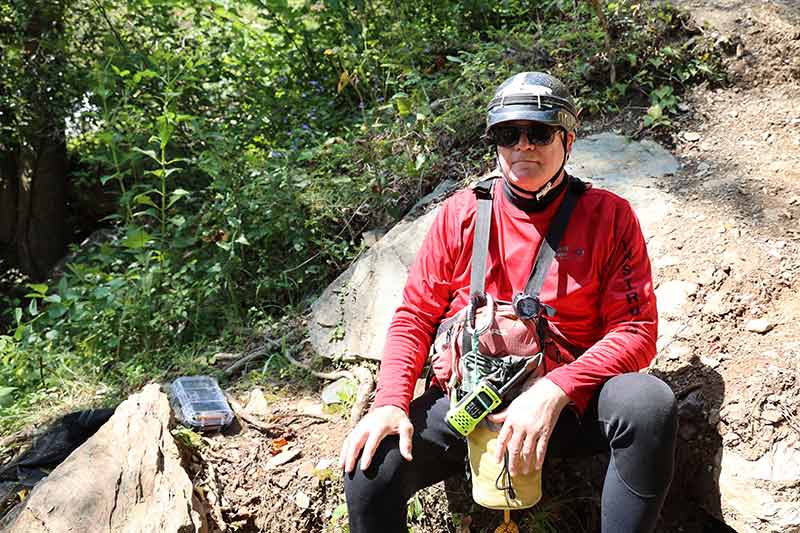
Jim McCool, a swift-rescue instructor with Scenic Rivers Water Rescue, has used the Ocoee River to train rescue crews for the past 25 years.
The TVA Advantage
Behind this critical training is a unique partnership with TVA’s River Forecast Center, which balances the Tennessee River system for public benefits like power production, flood mitigation, water quality, recreation and rescue training as well.
“We do our very best to accommodate those swift-water training events because we know that it can save lives,” Benjamin Heath, TVA River Forecast Center operations support manager, said. “It prepares rescue individuals and gives them the necessary training and practice, which ultimately helps the public as well.”
Throughout his time at TVA, Heath has seen an uptick of swift-water rescue teams that choose to train on TVA-managed waters because of their predictability.
The River Forecast Center is staffed 24 hours a day, 365 days a year, allowing rescue teams to train with the same reliability during nighttime operations as they do during the day.
These night drills proved vital during the early hours of the Kerrville floods and in rescues during Hurricane Helene.
“You’re not getting calls in good weather. You’re getting them at night, in the rain, when it’s cold,” McCool said. “(During training) we swim, wade, paddle and perform contact rescues ... to understand how water moves and how to work with it, not against it.”
For rescuers, access to TVA-managed rivers allows them to push themselves physically and mentally, sharpening their tangible rescue skills and the intangible qualities of improved decision-making and awareness.
It gives them a level of confidence to know that if they can do something on a TVA-managed river, they can do it anywhere, Brown said.
For TVA, managing the river is about more than power generation or flood control.
It’s about keeping a promise made over 90 years ago that, come rain or high water, TVA will be there to serve the people of the Valley region.
“I go back to the TVA motto, ‘Built for the people of the Tennessee Valley,’ that's written on many of the dams,” Heath said. “This is just one more way that we can serve the people of the Tennessee Valley or even broader beyond, to serve the people of this country.”
Photo Gallery
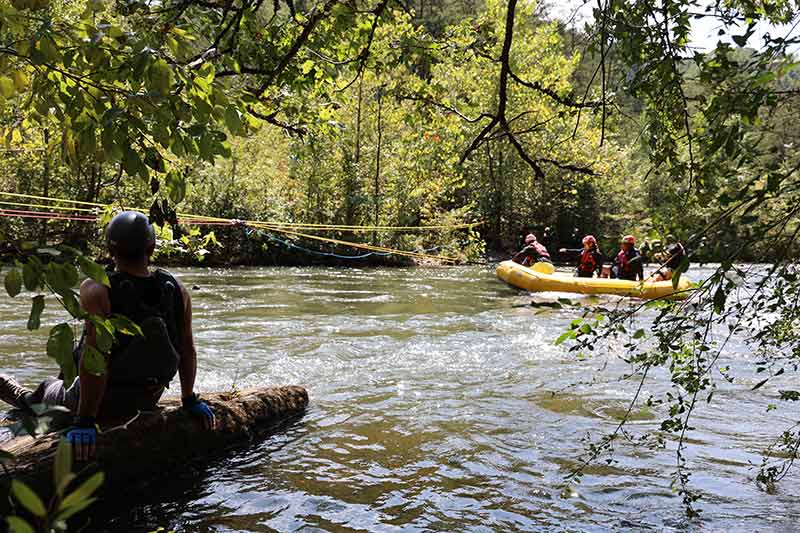
The rivers allow crews to operate a raft in currents that mimic what swift-water rescue teams will be responding in.
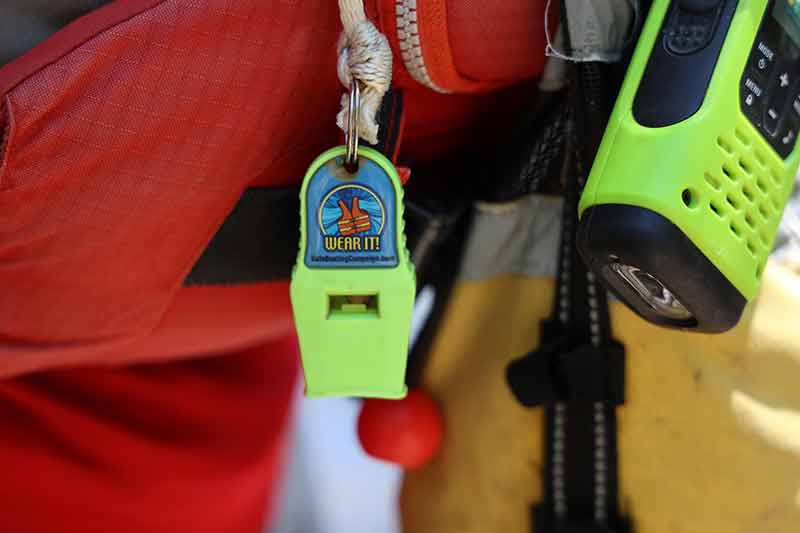
The Valley region’s rivers offer the challenging conditions that rescue crews look for when conducting swift-water training, but safety remains a top priority during exercises.
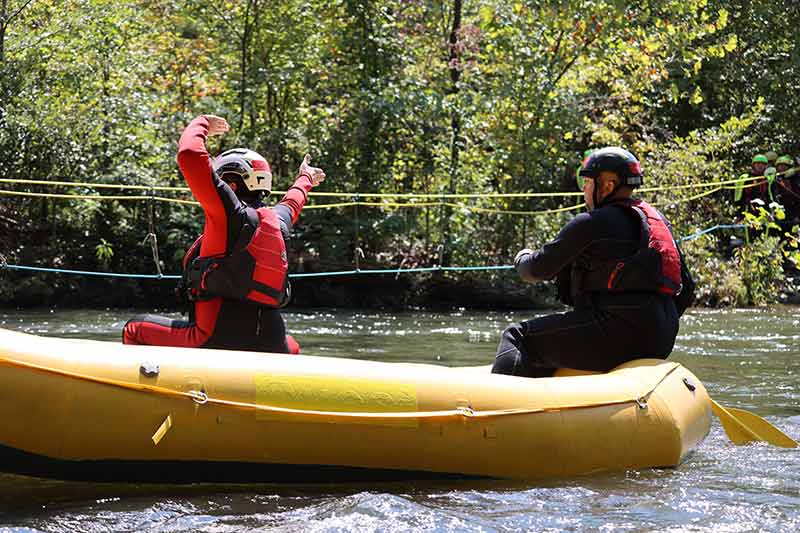
A training participant uses hand signals to communicate with crews on shore. This ensures responders can coordinate effectively even in high-noise environments.

Swift-water rescue training gives crews a real-world opportunity to put their gear to the test and manage any equipment challenges.
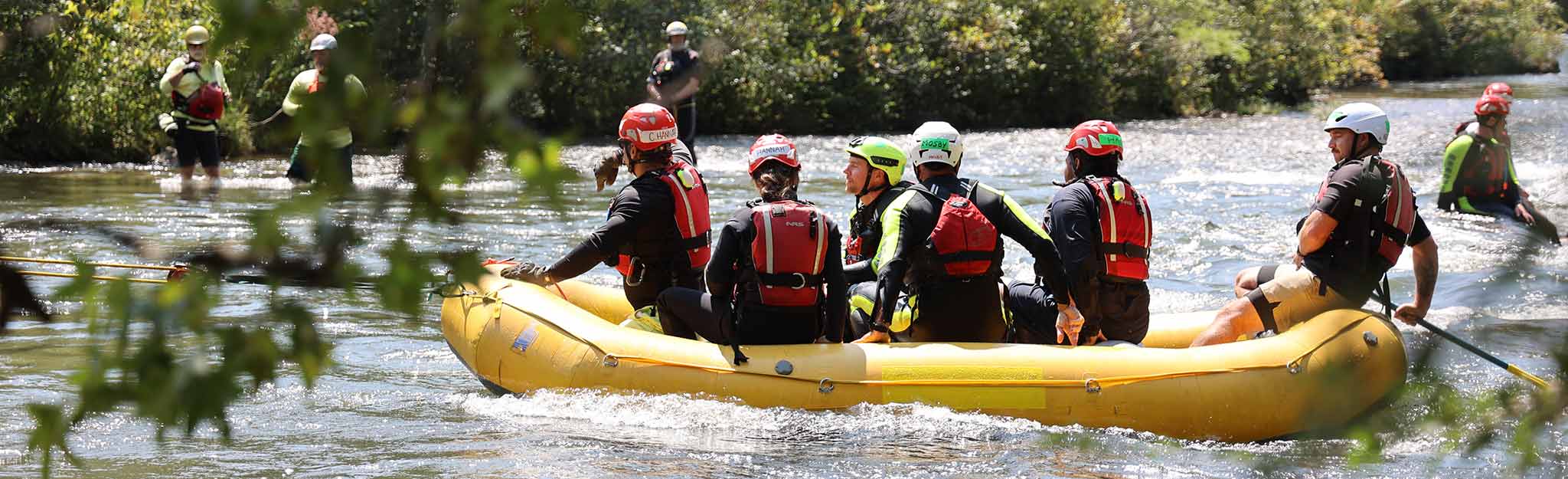
PHOTO AT TOP OF PAGE: Crews from Tennessee fire departments in Nashville, Brentwood, Chapel Hill, La Vergne and Germantown practice rescue training on the Ocoee River.

Abdiel Vallejo-Lopez
Staff Writer
Share this story: ' fill='%23414141'%3E%3Cpath d='M0 0h314v314H0z'/%3E%3C/g%3E%3Cg transform='translate(6 4)'%3E%3Cmask id='d' fill='%23fff'%3E%3Cuse xlink:href='%23c'/%3E%3C/mask%3E%3Cuse fill='%23FFF' xlink:href='%23c'/%3E%3Cg mask='url(%23d)' fill='%23FFF'%3E%3Cpath d='M-149-165h300v318h-300z'/%3E%3C/g%3E%3C/g%3E%3C/g%3E%3C/svg%3E%0A)
' fill='%23414141'%3E%3Cpath d='M0 0h314v314H0z'/%3E%3C/g%3E%3Cg transform='translate(4 5)'%3E%3Cmask id='d' fill='%23fff'%3E%3Cuse xlink:href='%23c'/%3E%3C/mask%3E%3Cuse fill='%23FFF' xlink:href='%23c'/%3E%3Cg mask='url(%23d)' fill='%23FFF'%3E%3Cpath d='M-167-171h323v327h-323z'/%3E%3C/g%3E%3C/g%3E%3C/g%3E%3C/svg%3E%0A)
' fill='%23414141'%3E%3Cpath d='M0 0h314v314H0z'/%3E%3C/g%3E%3Cg transform='translate(4.26 4)'%3E%3Cmask id='d' fill='%23fff'%3E%3Cuse xlink:href='%23c'/%3E%3C/mask%3E%3Cuse fill='%23FFF' xlink:href='%23c'/%3E%3Cg mask='url(%23d)' fill='%23FFF'%3E%3Cpath d='M-150-157h300v300h-300z'/%3E%3C/g%3E%3C/g%3E%3C/g%3E%3C/svg%3E)
Want more stories from The Powerhouse? Sign up to receive a monthly digest in your email.