'%3E%3Cmask id='b' fill='%23fff'%3E%3Cuse xlink:href='%23a'/%3E%3C/mask%3E%3Cuse fill='%23414141' xlink:href='%23a'/%3E%3Cg mask='url(%23b)' fill='%23414141'%3E%3Cpath d='M-160-170h300v300h-300z'/%3E%3C/g%3E%3C/g%3E%3C/g%3E%3C/svg%3E)
A Study in Streams
TVA and Partners Strengthen Environmental Education Opportunities
How much can students learn in a 50-minute class?
For eighth graders from western North Carolina’s Macon County Middle School, a lot.
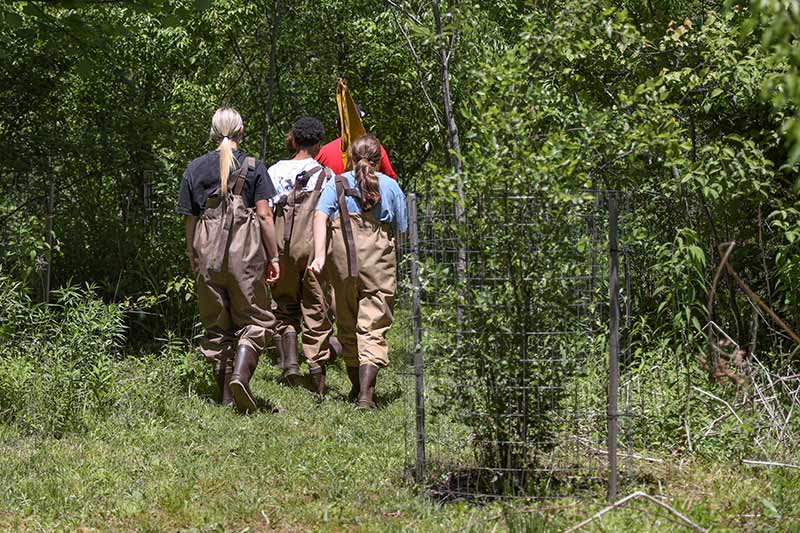
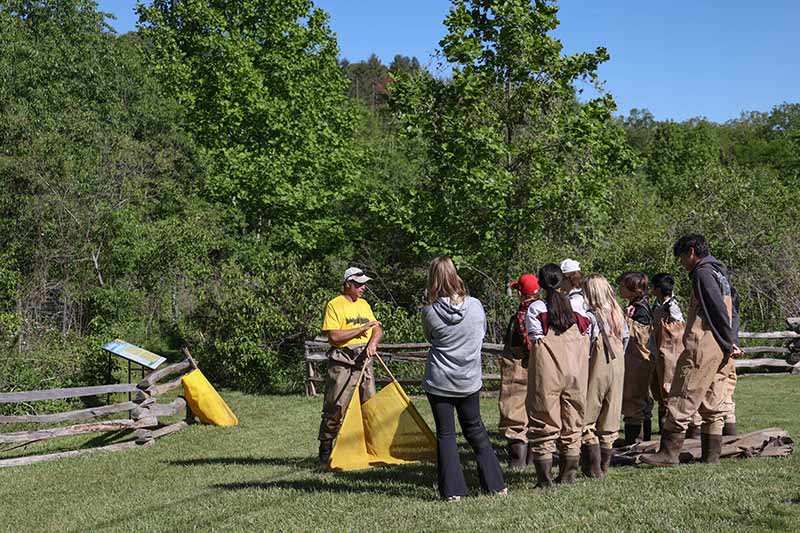
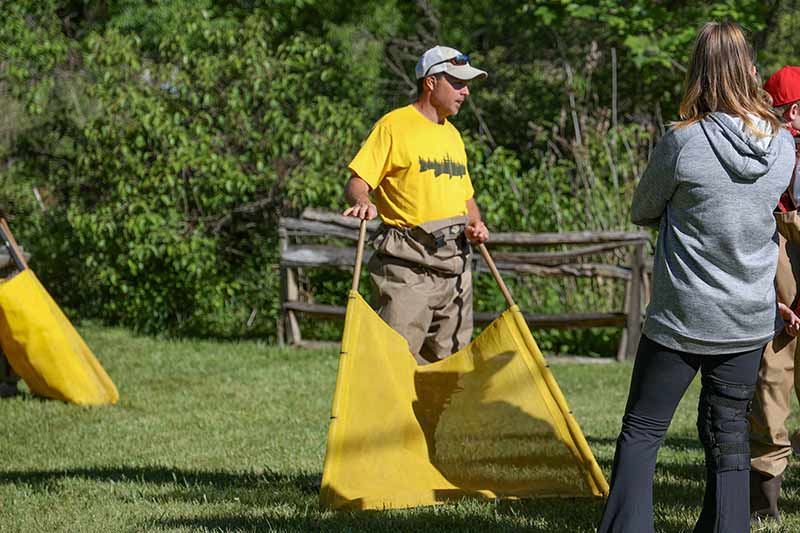
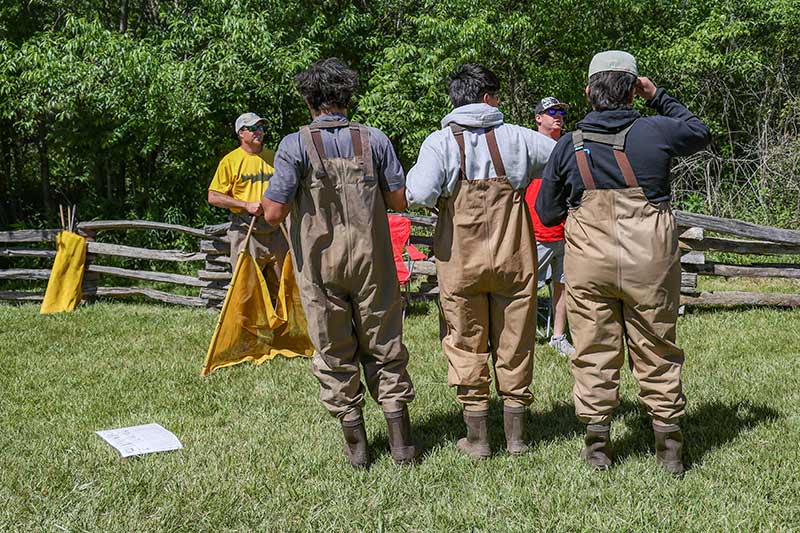
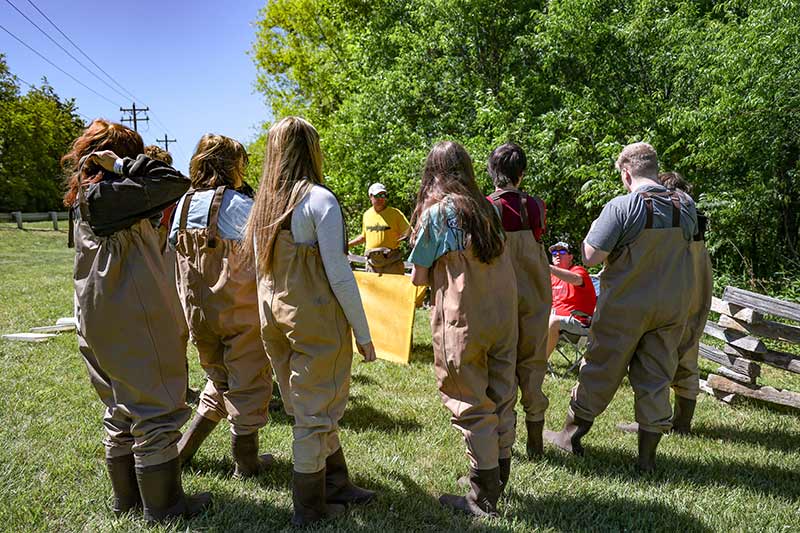
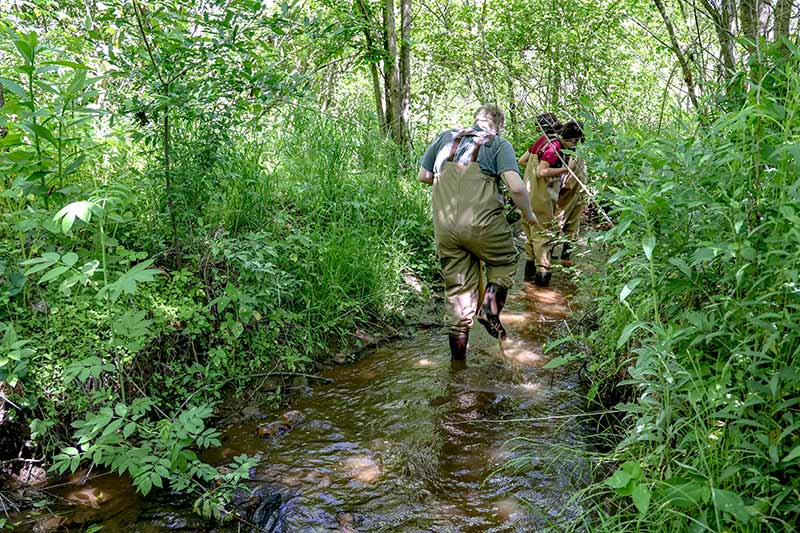
On a sunny morning, Zach Tallent’s Environment and Natural Resources class crossed the street to Cove Branch, which flows next to Mountain View Intermediate School in Franklin.
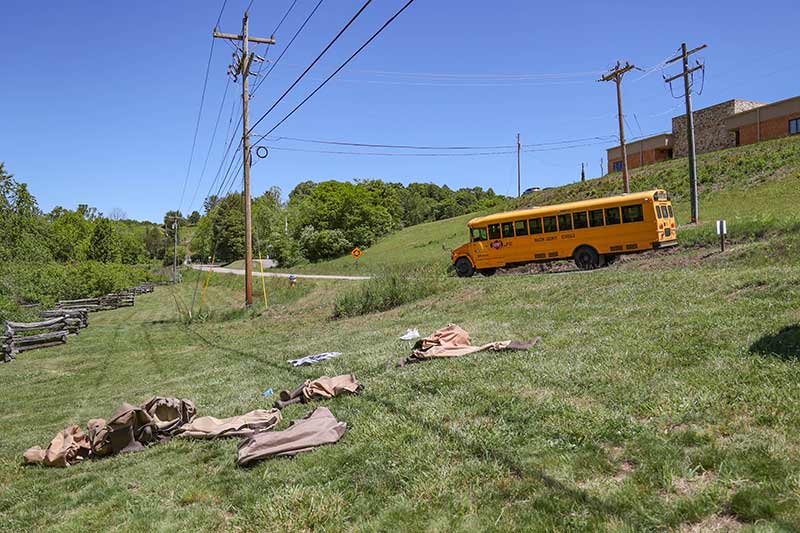
Kids tugged on waders and, after a quick lesson in using a net, dropped into the deep shade of the tree-lined stream to collect samples.
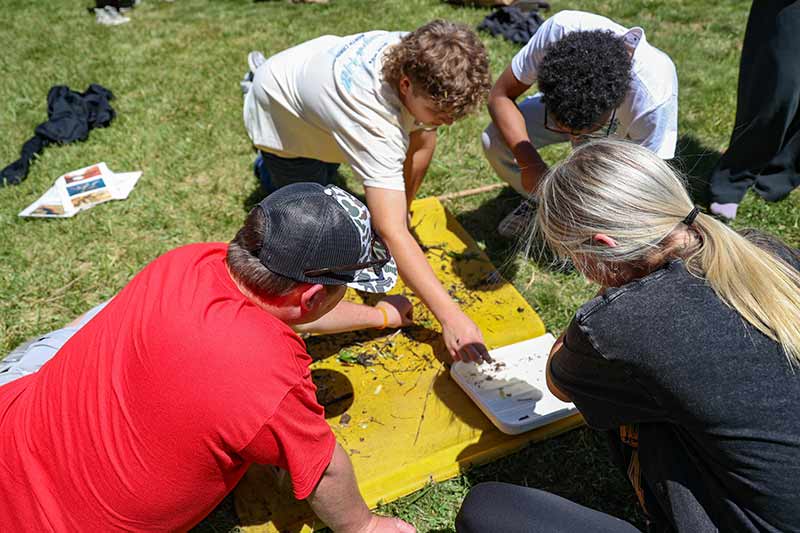
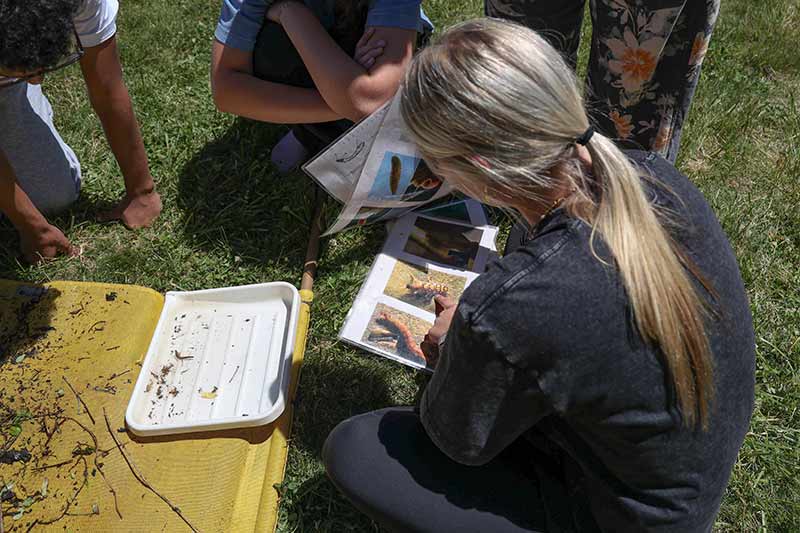
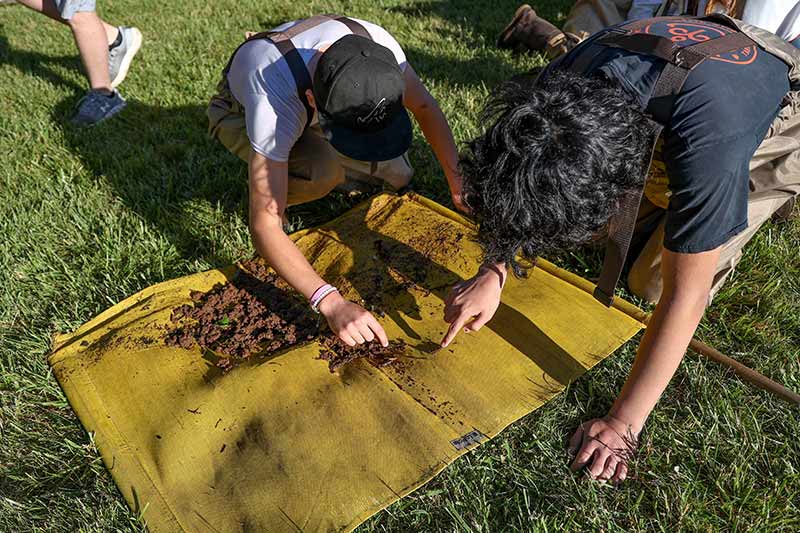
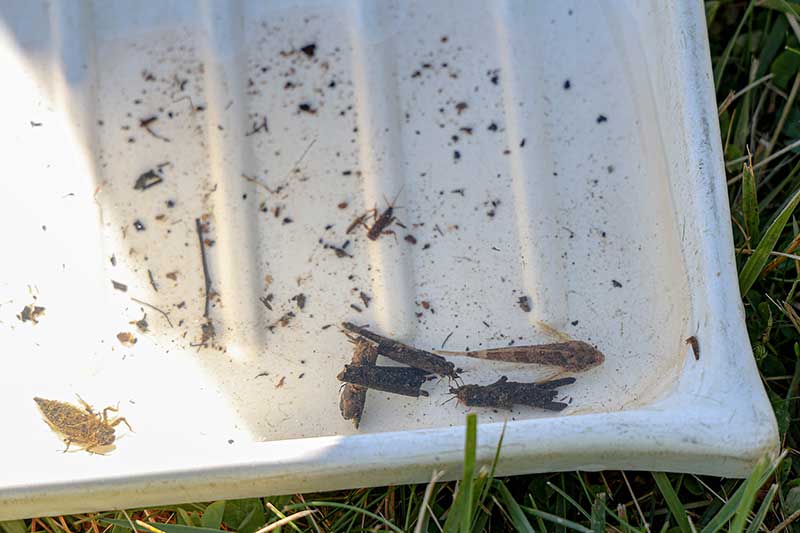
“I have those insects in my stream,” a girl said, peering at the sample her group poured onto a tray.
“This one looks like a tiny turtle,” another called.
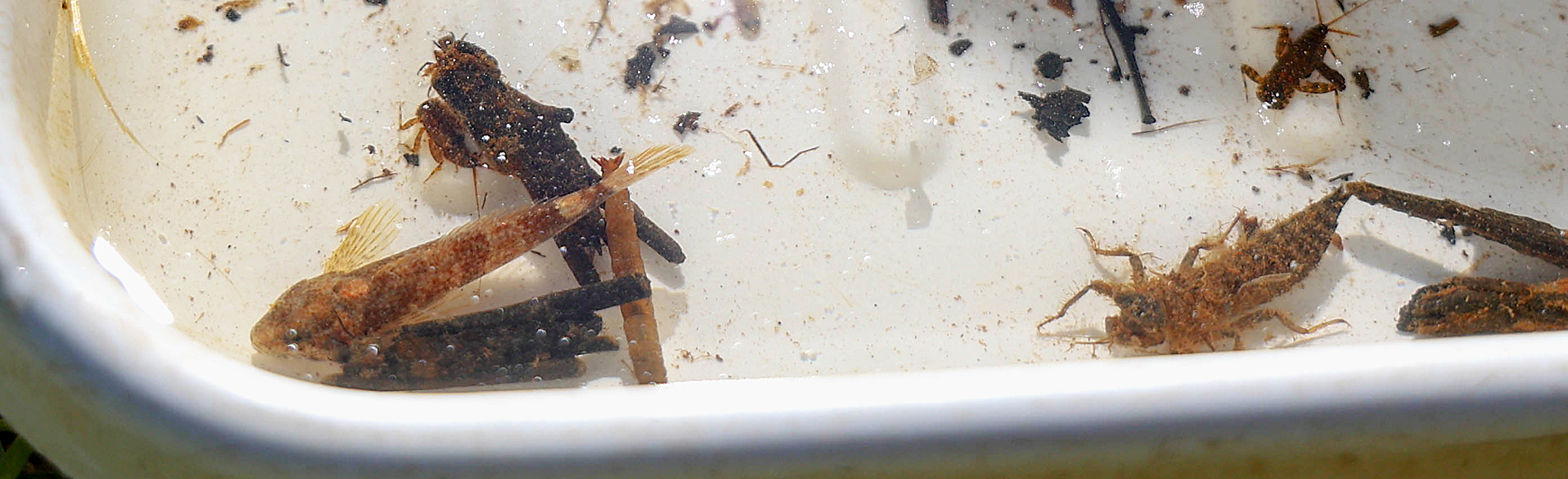
The students gently plucked wiggling, multilegged creatures from the pebbles, sand and curled decaying leaves caught in their nets.
“As you keep looking, more and more aquatic macroinvertebrates are going to appear,” Jennifer Love, Macon County director of STEM and Edventure Programs, said.
That was the day’s goal. Look closely. Ask questions. Count species. Evaluate if this water, which flows into streams that power the region, is pristine or polluted.
This living water quality lab and its trees, signs and fencing were born through partnerships with TVA and many other agencies and organizations.
“TVA focuses on working with partners to make the biggest impact for our rivers,” TVA Environmental Stewardship program manager Shannon O’Quinn said.
It’s part of TVA’s tri-part mission: energy production, including hydroelectric and nuclear along the region’s rivers, environmental stewardship to support ecosystems and drinking water, and economic development that bolsters outdoor recreation and flood protection for farmland and communities.
“This was a collaboration,” Love said. “TVA’s (partnership lets us) highlight this intentional riparian area. It helps us say, ‘This is on purpose.’”
Diversity of Life
Ten years ago, this outdoor education day seemed impossible.
That’s when what had been a budding outdoor classroom – offering practical lessons in the seasons, water quality and an intact food web – was bushhogged to look more like a manicured lawn.
Love and other teachers felt the loss.
Then, they got to work rebuilding it.
Teachers reached out to federal, state and local partners to restore the area.
Agencies and organizations helped them replant native trees and shrubs and regrade the slopes to reduce stormwater runoff.
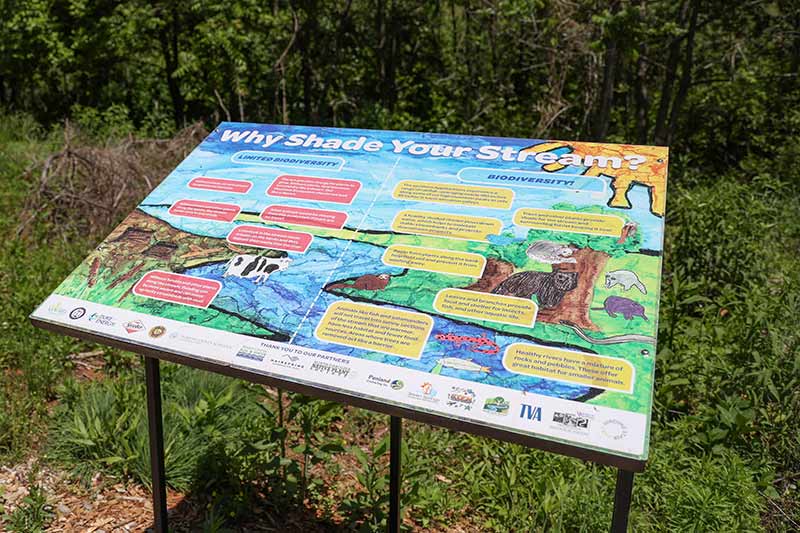
And TVA partnered with the schools to build a fence delineating the riparian area and add educational signs.
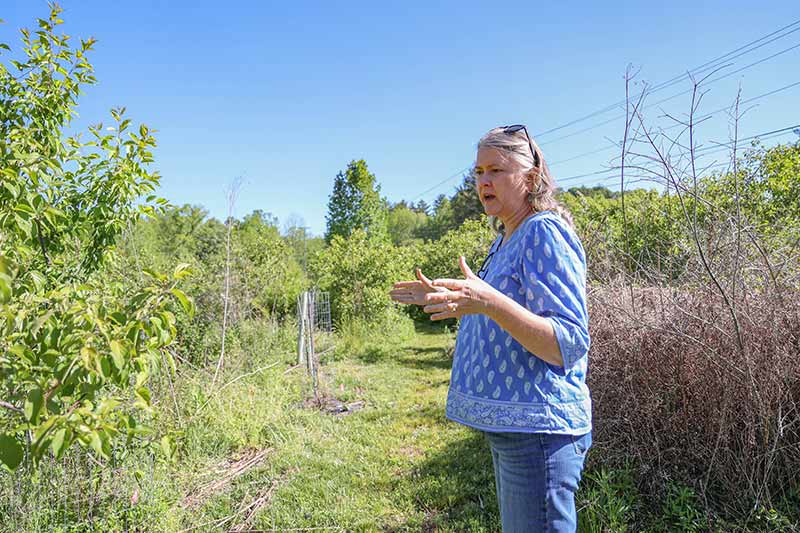
“There’s an aesthetic that every creek has to be cleared,” Love said. “I want to show that this is beautiful and highly functional. If you let it grow, the birds and insects will come back.”
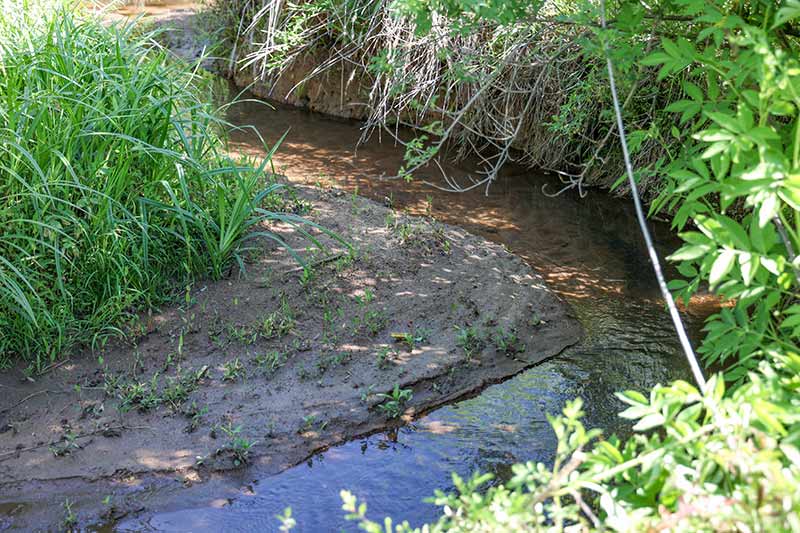
Now, native trees such as silky dogwood, tulip poplar, sycamore, willow, elderberry, ninebark and buttonbush form a buffer to shade the stream and filter sediment.
That keeps water cool and clean.
A path winds along its banks, offering glimpses into pebble-bottomed riffles and sandy spits dotted with muskrat tracks.
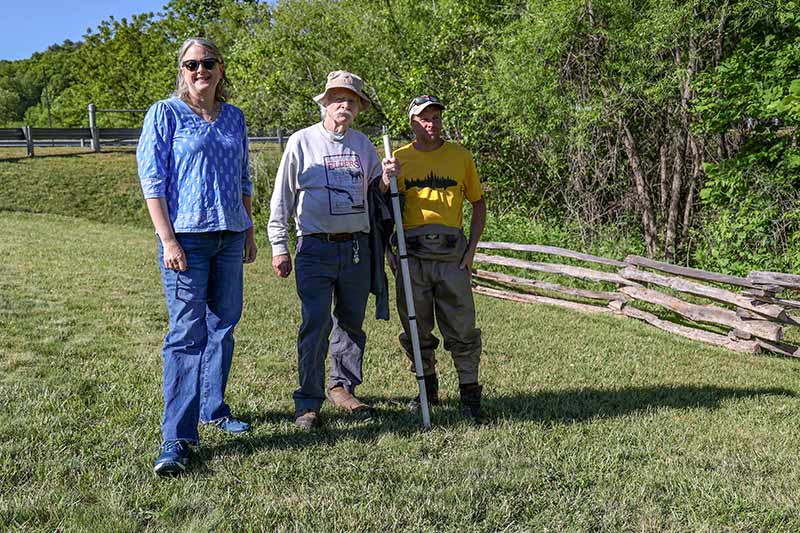
“TVA has helped restore the riparian buffer at this stream,” Jason Meador, of Mainspring Conservation Trust, said.
“There’s a direct link between that riparian buffer and diversity of life,” Love said.
Counting Creatures
As the sun arced high in the sky, three more classes and dozens of kids splashed into the stream.
They analyzed the tiny, shiny, segmented insect larvae wiggling in the water.
They found spiny turtle mayflies.
Craneflies.
Stoneflies.
Caddisflies camouflaged as sticks.
“You study the bugs, you learn a lot,” Meador said. “But what is the bugs’ ecological purpose? What do they eat?”
Tallent prompted: “Where did you find most of them?”
“In the leaves!”
Love nodded. “Look at how many different bug species there are in the leafy sample versus the mud.”
“And what eats those bugs?” Tallent said.
“Fish! Salamanders! Frogs!” students called. “Snakes! Crawdads! Spiders, birds and bats."
“Every other major taxa group in the animal kingdom eats these,” Meador said. “These are decomposers at the base of the food chain.
“If these trees and plants disappear, bugs disappear. Fish disappear. We lose animals all the way up to bears. That’s the big overarching ‘why’ of why we’re out here looking at and counting bugs.”
Backyard Discoveries
This was no abstract lesson.
Cove Creek flows through farmland and suburban areas upstream, then into the most degraded stretch of the Cullasaja River just a few hundred meters away.
Individual landowners have a big impact on water quality.
“We use water for drinking, bathing, agriculture, recreation like swimming, fishing, tubing,” Meador said. “Where do you want to play and drink water? Where you want the fish you eat to come from?”
“Clean water,” a student said.
“This stream flows into larger rivers that we drink from and that power dams like ... TVA’s, providing electricity,” Meador said. “It matters that these trees are here and that it’s clean.”
These streamside lessons help the next generation understand that riparian buffers help everyone – and everything – downstream.
“I appreciate so much TVA and all the organizations that support this work,” Love said. “It’s launching a sense of belonging and interest in science here, and in students’ own backyards.”
“Could this water quality be better? Could it be worse?” Meador asked kids. “What do you think on a scale from pristine to polluted?”
“Pretty good,” a student spoke up.
“Pretty good,” Meador nodded.
Share this story: ' fill='%23414141'%3E%3Cpath d='M0 0h314v314H0z'/%3E%3C/g%3E%3Cg transform='translate(6 4)'%3E%3Cmask id='d' fill='%23fff'%3E%3Cuse xlink:href='%23c'/%3E%3C/mask%3E%3Cuse fill='%23FFF' xlink:href='%23c'/%3E%3Cg mask='url(%23d)' fill='%23FFF'%3E%3Cpath d='M-149-165h300v318h-300z'/%3E%3C/g%3E%3C/g%3E%3C/g%3E%3C/svg%3E%0A)
' fill='%23414141'%3E%3Cpath d='M0 0h314v314H0z'/%3E%3C/g%3E%3Cg transform='translate(4 5)'%3E%3Cmask id='d' fill='%23fff'%3E%3Cuse xlink:href='%23c'/%3E%3C/mask%3E%3Cuse fill='%23FFF' xlink:href='%23c'/%3E%3Cg mask='url(%23d)' fill='%23FFF'%3E%3Cpath d='M-167-171h323v327h-323z'/%3E%3C/g%3E%3C/g%3E%3C/g%3E%3C/svg%3E%0A)
' fill='%23414141'%3E%3Cpath d='M0 0h314v314H0z'/%3E%3C/g%3E%3Cg transform='translate(4.26 4)'%3E%3Cmask id='d' fill='%23fff'%3E%3Cuse xlink:href='%23c'/%3E%3C/mask%3E%3Cuse fill='%23FFF' xlink:href='%23c'/%3E%3Cg mask='url(%23d)' fill='%23FFF'%3E%3Cpath d='M-150-157h300v300h-300z'/%3E%3C/g%3E%3C/g%3E%3C/g%3E%3C/svg%3E)
Want more stories from The Powerhouse? Sign up to receive a monthly digest in your email.